How to Choose a Floor Color
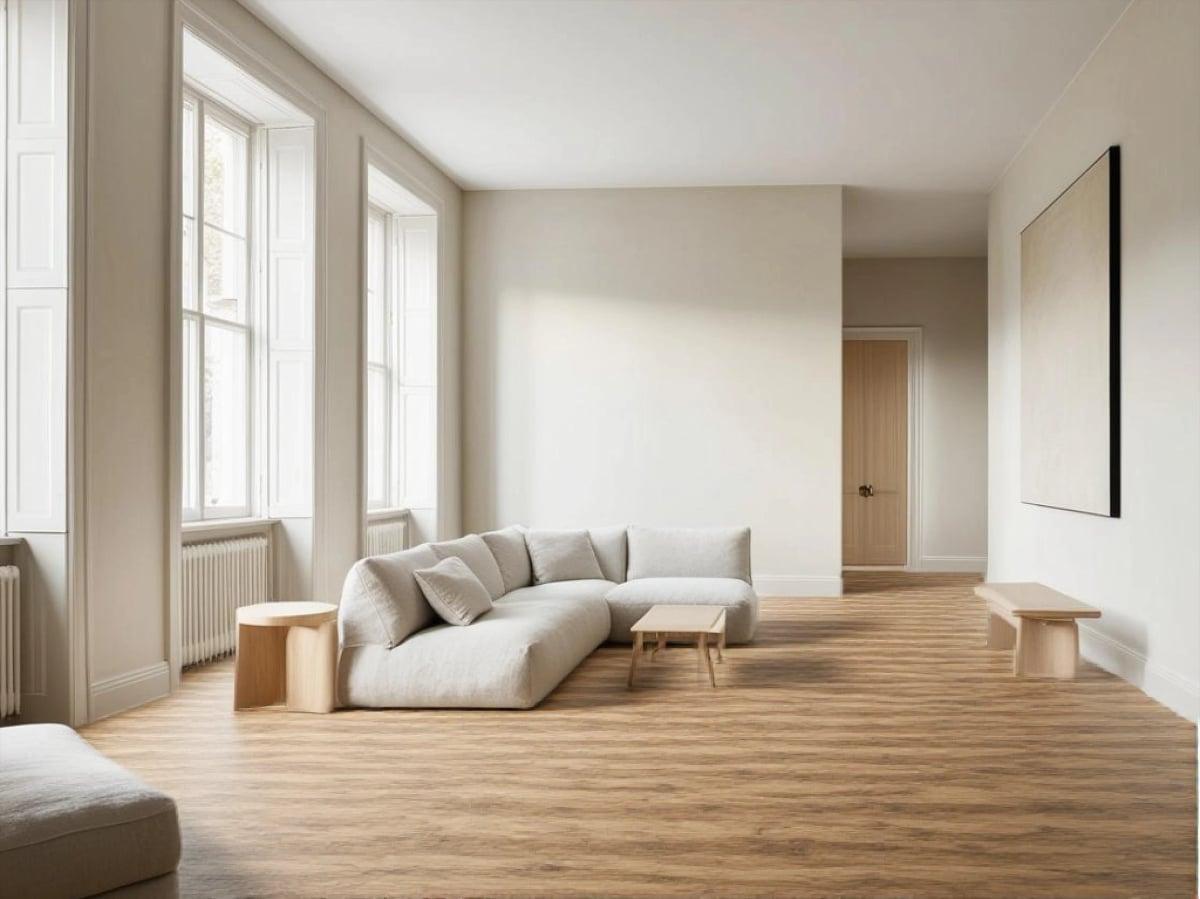
Pick a light floor to make a small room feel larger, a mid-tone if you want dust and marks to show least, and test the sample in your own room in daylight and in the evening before you order. The same plank reads differently in a north-facing room than in a showroom, so the room decides, not the swatch.

A light floor: the room reads larger and brighter
To make a room feel bigger
Go lighter and go continuous. Tarkett's guidance for small spaces is to choose light-coloured flooring, such as pale wood or light-toned vinyl, and to use the same floor through connecting areas so the eye is not stopped at each doorway. Quick-Step adds a warning for narrow rooms: dark colours on the floor or the walls make a narrow room look narrower.
Format and direction matter as much as colour
- Lay planks in the direction of the main light source and of the most-used entrance, Quick-Step advises.
- In a narrow room, boards laid across the width make the surface look wider.
- In a short room, boards laid lengthwise make it look longer.
- Large-format planks or tiles read as one continuous surface and suit bigger rooms; smaller formats suit compact or irregular rooms.
Check which way the room faces
Light changes the colour you bought. Farrow & Ball's guidance on orientation is written for paint, but the same light falls on the floor: northern light brings out the cooler tones in a colour, south-facing rooms are filled with warm light through the day, and east- and west-facing rooms shift between cooler and brighter light from morning to evening. A wood-floor supplier, Havwoods, puts it in flooring terms: a pale oak sample that looks warm in a showroom can look cool in a north-facing living room.
Which floor colour shows the least dust
Mid-tones. Very dark and very light floors both show more. A French tile retailer's guide on this exact question concludes that white is among the colours that show dirt most, that dark colours highlight the smallest defect, and that intermediate shades such as beige, sand, grey and taupe are the more practical choice. Sheen matters too: the National Wood Flooring Association is cited as saying that lower-sheen finishes make small scratches and normal wear less noticeable, and dark glossy floors tend to show more dust and surface marks.
What each floor tone does
| Floor tone | Effect on the room | Upkeep |
|---|---|---|
| 1Light (pale oak, light stone) | Makes a small room feel larger | Shows dark dirt and marks |
| 2Mid-tone (natural oak, beige, taupe) | Neutral; works with most furniture | Shows the least |
| 3Dark (walnut, charcoal) | Narrows a narrow room; adds depth in a large one | Shows dust, light pet hair and scratches, more so in gloss |
Sources are listed at the end of the article. Scroll sideways on mobile →
The same room with a mid-tone natural oak floor
With your cabinets and furniture
Here the advice is designers' judgement rather than a rule, so treat it as a starting point. In a kitchen-flooring guide published by Homebuilding & Renovating, Josie Medved of Symphony Group calls contrast between the units and the floor a safe bet. Alex Main of MAIN says a light or mid-tone floor works best with cabinetry in deeper colours, and that warmer cabinet colours pair well with warm or neutral floors. Medved also warns that mixing warm woods such as cherry, beech and oak with cool-toned cabinets creates visual discord.
Our reading of that advice, room by room
- Oak or honey-oak cabinets are warm: keep the floor warm or neutral, and noticeably lighter or darker than the cabinets so the two do not blur together.
- Dark cabinets or dark wood furniture: a light or mid-tone floor keeps the room from closing in.
- White cabinets or white walls: almost any floor works, so let the room's light and size decide.
- Grey walls: check the undertone of the grey first. A cool grey beside a warm, orange-leaning floor is the mismatch people regret.
How to test before you commit
Bring samples home. Quick-Step's advice is to see the effect of light during the day and in the evening, check the match with your furniture, and compare your favourites side by side. Havwoods recommends watching a sample across at least a full day, because morning light is cooler, midday light more neutral and evening light warmer.
See the colours in your own room first
A sample covers a square foot. The decision covers the whole room. Styly's floor visualizer shows your own room with a different floor from a single photo, so you can put a pale oak, a natural mid-tone and a dark walnut next to each other in your light, with your walls and your furniture, before you order samples.
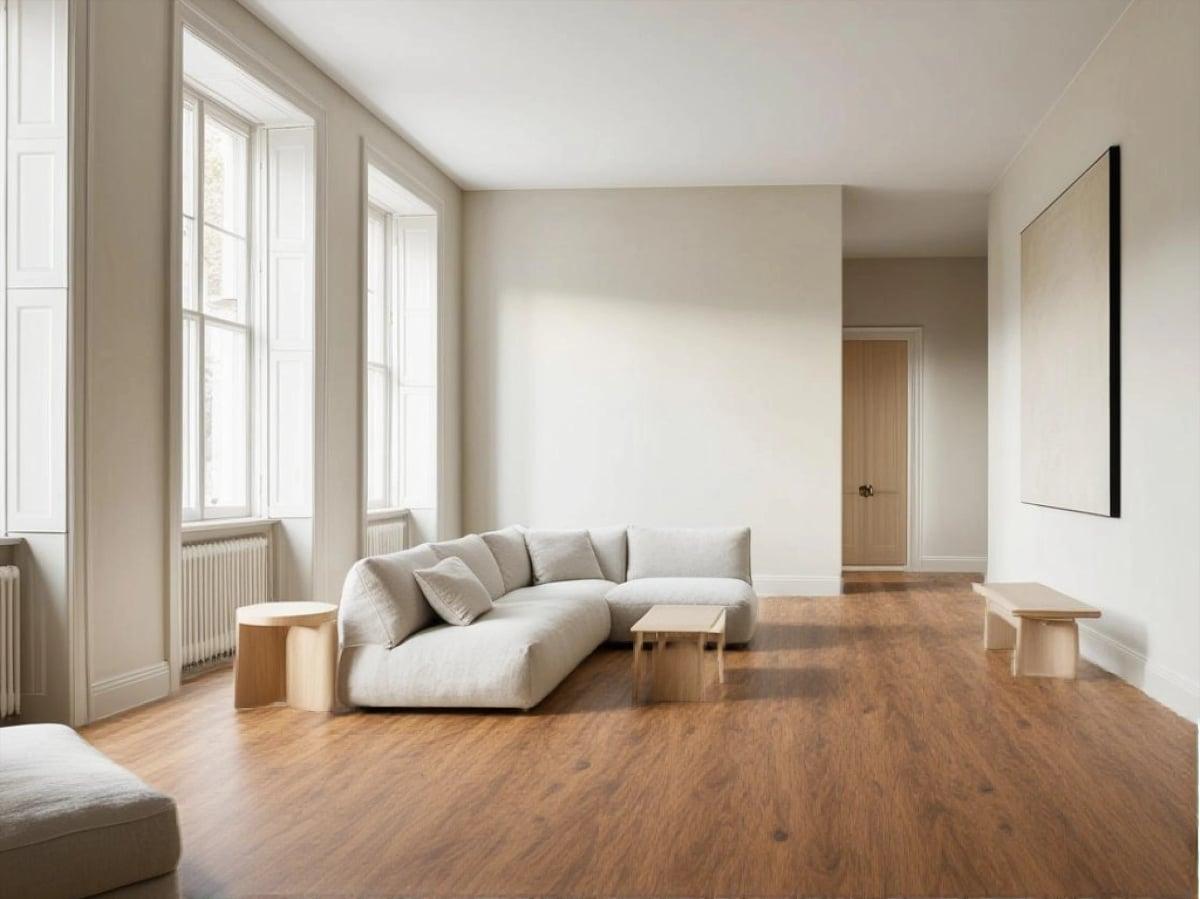
The same room with a darker wood floor, visualised with Styly
Try floor colours on a photo of your room
Upload a photo and compare floors in your own space. The floor and wall visualizer is included in Styly Starter, which starts with a 7-day free trial.
Try Styly →Choosing a floor color: FAQ
What color flooring makes a room look bigger?
Light floors. Tarkett recommends light-coloured flooring and the same floor through connecting rooms; larger-format planks help the surface read as continuous.
What color flooring goes with dark cabinets?
A light or mid-tone floor, according to designer Alex Main, quoted by Homebuilding & Renovating.
What color flooring goes with oak cabinets?
Warm or neutral floors, by the same designer's advice for warm cabinet colours. Keep enough contrast that the floor and the cabinets do not merge.
Do dark floors show more dust?
Yes, especially in gloss. Mid-tones in a low-sheen or satin finish show the least dust, marks and scratches.
Which direction should the planks run?
With the main light source and the most-used entrance, Quick-Step advises. Across the width to widen a narrow room; lengthwise to lengthen a short one.
Should I use the same floor throughout the house?
In connecting areas, yes if you want the space to feel larger. Tarkett recommends it for visual continuity.
Why does my sample look different at home?
Because of your light. North light brings out cool tones, and morning, midday and evening light all read differently, so check the sample across a full day.
How this guide was put together
The points about room size, direction, light and upkeep come from the manufacturers and specialists named with them, read in October 2026. The advice on cabinets and furniture is designers' opinion and is attributed as such. We found no reliable source for a single right floor for grey walls or for any link between floor colour and resale value, so we have not claimed one.